Lead Generation: The Complete Guide to Attracting and Converting Quality Prospects

Shivam
4 min read
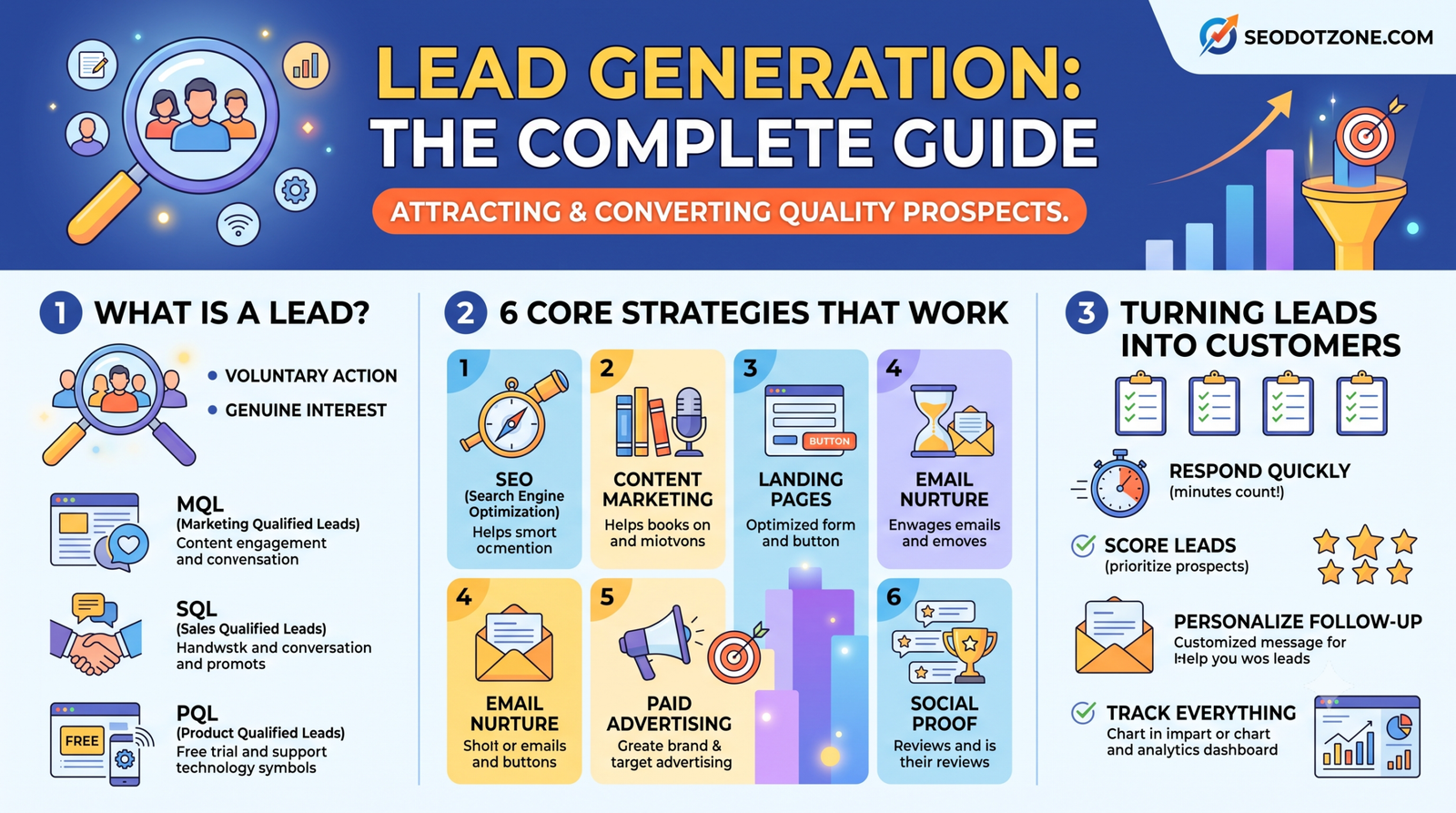
Every business, no matter its size or industry, lives and dies by one core activity: generating leads. You can have the best product, the most talented team, and a beautifully designed website, but without a steady stream of qualified prospects entering your sales pipeline, growth simply stalls. Lead generation is the engine that keeps that pipeline full, and understanding how to do it well is one of the most valuable skills a business can develop.
What Is Lead Generation, Really?
At its core, lead generation is the process of attracting strangers and turning them into people who have expressed interest in your company’s product or service. That interest might look like filling out a contact form, subscribing to a newsletter, downloading a free guide, or requesting a demo. The key distinction is that a lead has taken a voluntary action that signals genuine interest, as opposed to a cold contact you’ve simply found and reached out to.
Not all leads are created equal, though. Marketers typically separate them into a few categories:
- Marketing Qualified Leads (MQLs) – people who have engaged with your marketing content but aren’t necessarily ready to buy yet.
- Sales Qualified Leads (SQLs) – prospects who have been vetted and are considered ready for a direct sales conversation.
- Product Qualified Leads (PQLs) – common in SaaS businesses, these are users who have experienced value through a free trial or freemium product and show buying signals.
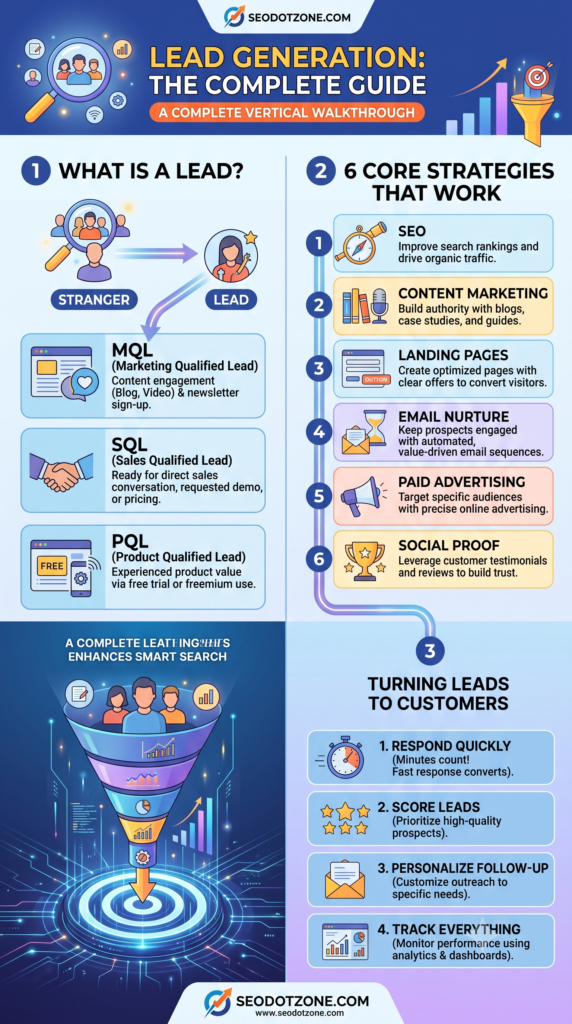
Understanding where a lead sits in this spectrum helps you tailor your follow-up and avoid wasting resources on people who simply aren’t ready yet.
Why Lead Generation Matters More Than Ever
The buyer’s journey has changed dramatically over the past decade. Prospects now do the majority of their research online before ever speaking to a salesperson. They compare competitors, read reviews, watch demo videos, and consume blog content long before filling out a “Contact Us” form. This means your lead generation strategy needs to meet people where they already are: search engines, social media, and content platforms.
A strong lead generation system does more than just fill your sales funnel. It builds trust before the first conversation even happens, shortens sales cycles because prospects arrive better informed, and creates a measurable, repeatable process rather than relying on referrals or luck.
Core Lead Generation Strategies That Actually Work
- Search Engine Optimization (SEO)
Ranking for the keywords your ideal customers are searching for is one of the most sustainable ways to generate leads. Unlike paid ads, organic traffic keeps working long after the initial investment, making SEO a compounding asset rather than an ongoing expense.
- Content Marketing
Blog posts, case studies, whitepapers, and video content position your business as a trusted authority. Gated content, like an in-depth guide behind an email opt-in, is a classic and effective way to convert website visitors into leads.
- Landing Pages With Clear Offers
A dedicated, distraction-free landing page built around a single, compelling offer converts far better than sending traffic to a generic homepage. Every element – headline, imagery, form length – should be optimized around one goal: getting the visitor to take action.
- Email Marketing and Nurture Sequences
Not every lead is ready to buy immediately. Automated email nurture sequences keep your brand top of mind, deliver additional value over time, and gradually move prospects closer to a purchasing decision.
- Paid Advertising
Platforms like Google Ads and LinkedIn Ads allow you to target prospects with precision based on search intent, job title, or behavior. While it requires ongoing budget, paid advertising can generate leads quickly while your organic efforts build momentum in the background.
- Social Proof and Referral Programs
Testimonials, case studies, and referral incentives leverage your existing happy customers to bring in new ones. People trust recommendations from peers far more than any marketing message.
Turning Leads Into Customers
Generating leads is only half the equation – converting them is where revenue actually happens. A few best practices make a significant difference:
- Respond quickly. Studies consistently show that leads contacted within the first few minutes convert at dramatically higher rates than those contacted hours later.
- Score your leads. Not every lead deserves the same level of attention. Lead scoring helps your sales team prioritize the prospects most likely to close.
- Personalize your follow-up. Generic, templated outreach gets ignored. Reference the specific content or offer that brought the lead in.
- Track everything. Use CRM and analytics tools to understand which channels and campaigns are actually producing revenue, not just form fills.
Final Thoughts
Lead generation isn’t a single tactic – it’s an ecosystem of strategies working together to attract the right people and guide them toward becoming customers. The businesses that win aren’t necessarily the ones with the biggest budgets, but the ones that build a consistent, data-driven system for attracting, nurturing, and converting prospects over time.
If you’re ready to build a lead generation strategy tailored to your business, the right combination of SEO, content, and conversion optimization can turn your website into your most reliable source of new customers.
Frequently asked questions
Why is lead generation important for businesses?
What are the different types of leads?
How can SEO help with lead generation?
Still have questions? Talk to a strategist →

Written by
Shivam
Search strategist at SeoDotZone writing about SEO, analytics and sustainable growth for Indian and global brands.
Keep reading
-
GEO vs SEO vs AEO: What’s the Difference and Which One Does Your Business Need?  SEO
SEOGEO vs SEO vs AEO: What’s the Difference and Which One Does Your Business Need?
If you’ve been keeping up with digital marketing chatter lately, you’ve probably noticed a new crop of acronyms crowding out the old…
-
Core Web Vitals in 2026: A Practical Playbook for WordPress  SEO
SEOCore Web Vitals in 2026: A Practical Playbook for WordPress
Website speed is no longer just a technical concern—it is an important part of user experience, SEO, conversions, and overall website quality.…
-
What Is GEO (Generative Engine Optimization)? A Complete Guide for 2026  SEO
SEOWhat Is GEO (Generative Engine Optimization)? A Complete Guide for 2026
Search is changing rapidly. People are no longer relying only on traditional search engines to find information. Instead, users are increasingly asking…